

The Cabin Lighting Checklist: 10 Ways to Warm Up a Dark Log Interior
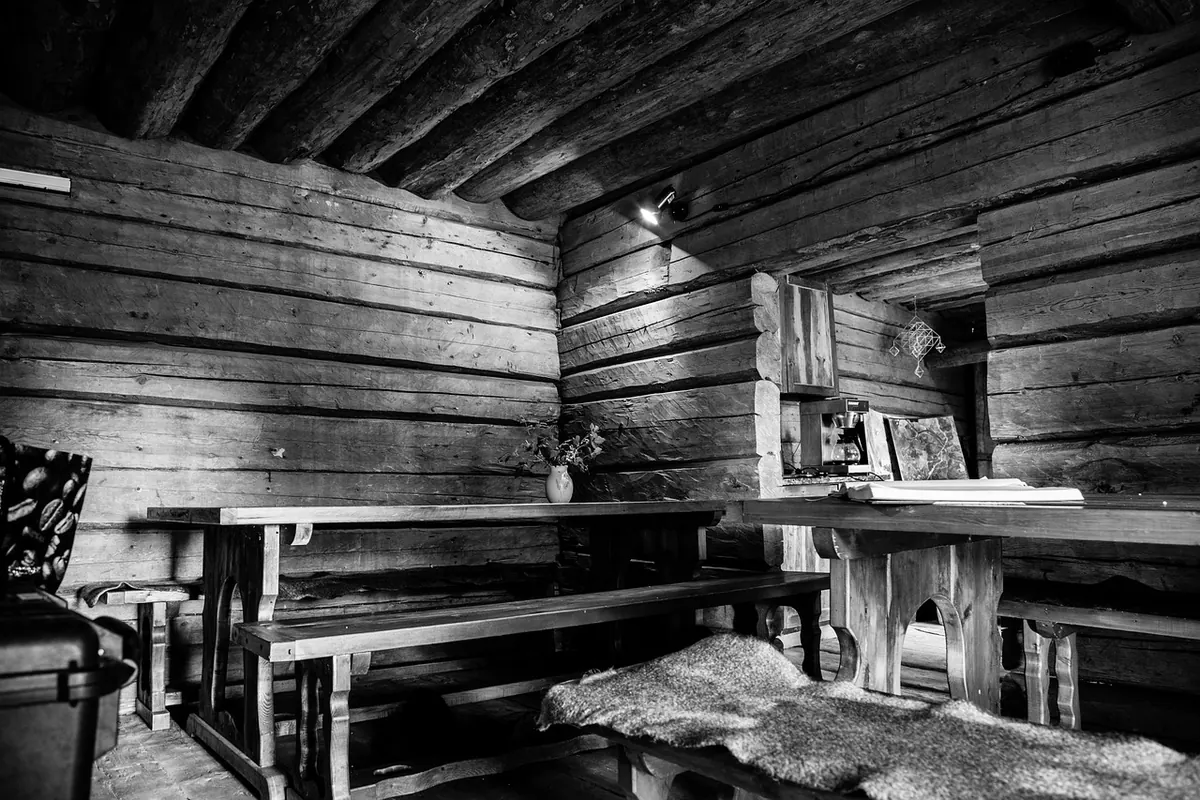
A dark log cabin is not a lighting problem you solve with one bigger bulb. Timber drinks light. Log walls are rarely flat and rarely pale, ceilings sit low, and windows are often small or shaded by a deep roof overhang. Add a single pendant in the middle of the room and you get a bright patch on the floorboards, four black corners and a headache by nine o'clock.
The answer is layering: several small, warm sources doing different jobs, placed where you actually sit, read, cook and walk. Work through the list below and you will notice the change long before you have spent much.
Layer light in threes
Before buying anything, understand the three jobs light does in a room. Most gloomy cabins are missing two of them.
Ambient light
The general wash that lets you move about safely. In a cabin this should come from several directions, not one central point, and it rarely needs to be bright.
Task light
Focused, close to the work: a lamp beside the chair you read in, a light over the hob, something directed at the kitchen table. These are the lights you actually switch on first.
Accent light
The deliberate one. A picture light, a shelf glow, a beam washed from below. It adds depth and stops the room reading as a flat box of brown.
Work with the timber, not against it
Dark, oiled logs absorb light rather than reflecting it, so a lamp aimed straight at a wall gives you a small bright circle and nothing else. Aim light upwards instead, onto the ceiling and along the beams, or bounce it off pale surfaces: a limed or waxed finish, a light rug, linen cushions, a mirror hung opposite the window. A pale ceiling is the single most useful thing you can give a low log room, because it lifts the whole space without adding a single watt at eye level.
The ten-point cabin lighting checklist
- Swap every cool-white bulb for a warm one. Look for 2700K or lower, and 2200K in lamps. If a bulb is throwing a blue-white cast across pine, it is undoing everything else on this list.
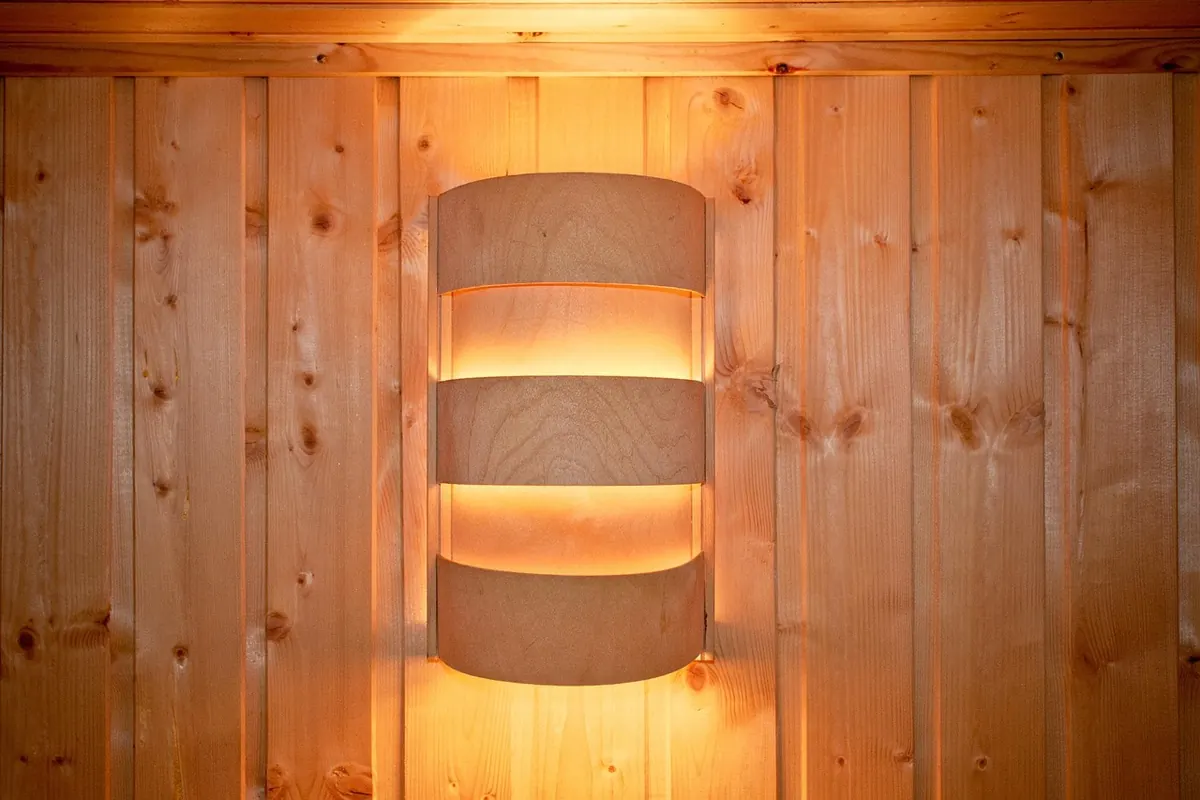
- Take the main light off the centre of the ceiling. Uplighters or wall sconces that throw light up the walls and beams will flatter the timber far more than a pendant in the middle of the room.
- Give every seat its own task light. One lamp within arm's reach of each chair or sofa end, so nobody has to get up to read or to see what they are doing.
- Dim the circuit. A dimmer switch on the main lights, or dimmable smart bulbs, so evenings can sit at a fraction of cleaning-day brightness.
- Add a low layer. Plug-in wall lights set around 40–60cm above the floor, or a floor lamp with a shade that throws light downwards, fill the middle of a room that overhead light ignores.
- Light the route, not the room, at night. A small warm glow at floor level between bed, bathroom and kitchen means you never have to flood a dark cabin at 3am.
- Use one or two accents properly. A picture light over a print, a strip above a shelf, an uplighter behind a chair to silhouette it. Two well-placed accents beat eight scattered ones.
- Choose shades that soften. Fabric, opaque, wider at the bottom. Bare bulbs at eye level create glare, and glare on dark wood makes a cosy room feel like a workshop.
- Reflect light back into the room. Pale textiles, a light rug, a mirror opposite the window. It costs nothing to rearrange and often does more than another lamp.
- Put switches where you are. Two-way switching, a remote, or a plug-in remote socket for the lamps, so the last thing you do at night is not walk the room turning things off.
Warm bulbs and the colour of light
Colour temperature is measured in kelvin, and lower numbers are warmer. Cool white bulbs sit around 4000K and will make oak look grey and skin look tired; 2700K is a good everyday choice, and 2200K in table lamps feels like candlelight without the smoke. Ignore wattage as a measure of brightness and look at lumens instead, then buy fewer of them than you think you need.
If you are dimming, check that the bulbs are dimmable and compatible with your switch. Older dimmer units and cheap LEDs sometimes buzz or flicker together, which is worth sorting out early rather than living with. Some dimmable LEDs are designed to shift warmer as they dim, mimicking the way a filament bulb behaves, and those suit a cabin beautifully in the evening.
Cabins without much wiring
Plenty of log buildings have very few sockets, and chasing new cable through solid timber is not a weekend job. Rechargeable table lamps, battery picture lights and magnetic strip lights designed for cupboards will get you a long way, and modern versions hold their charge well. Check the colour temperature on these too, as budget battery lamps are often colder than they look in the photographs.
For anything involving new sockets, extra circuits or cable routes through walls, use a qualified electrician. Trailing extension leads across doorways or under rugs is a trip hazard, so run cables along skirting or beam lines where they can be seen and clipped neatly.
Your evening audit
Do this once, at dusk, and you will stop guessing. Turn every light off. Walk slowly through the room and note where you squint, where your own shoulder casts a shadow across what you are trying to see, and which corners stay black however you move. Those notes are your shopping list.
Then fix it in stages. Two good lamps and a dimmer will transform most dark cabins before you spend anything on fitted lighting, and you can add accents later as you notice where the room still falls flat. Light a cabin the way you would light a stage: a little from above, a little from the side, and one small warm pool exactly where someone is sitting.
Photo: TheUjulala / Pixabay