

Common Mistakes When Decorating a Mountain Home (and How to Fix Them)
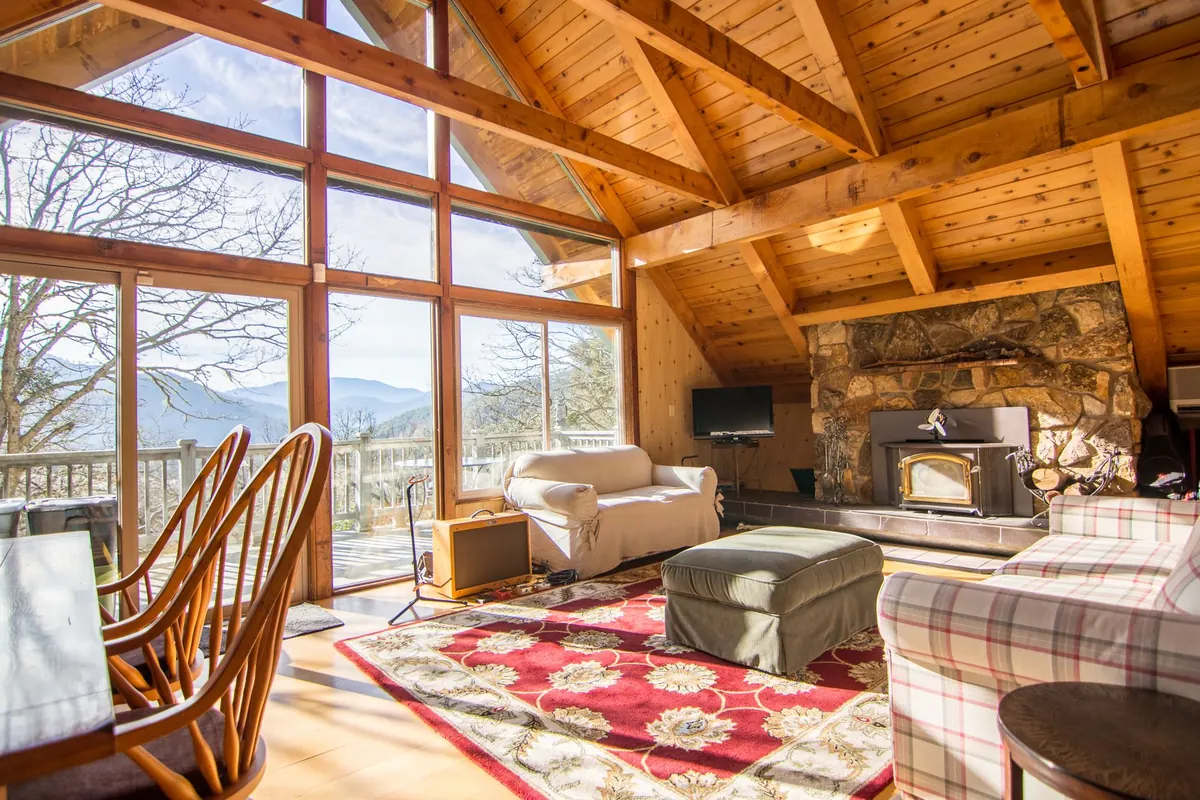
A mountain home asks more of its decoration than a town flat does. Rooms are often large and oddly shaped, the light shifts through the day and the seasons, and the weather comes in through the door on muddy boots and wet gloves. Most of the mistakes below come from decorating for a photograph rather than for the way the house is actually lived in. The good news is that none of them are expensive to fix.
Decorating against the view instead of with it
This is the one we see most often. A sofa pushed flat against the window wall. Curtains drawn from October to March. A television mounted opposite the glazing so that low winter sun washes out the screen every afternoon. The view is the reason the house exists, and it ends up treated as a wall.
Plan the room around sightlines first and the television last. A few adjustments do most of the work:
- Float the seating on a rug, facing the window where the room allows, rather than lining every piece up against the walls.
- Keep the sill and the bottom section of the glazing clear. Ornaments and photo frames belong somewhere else.
- Choose a curtain pole wider than the window so the curtains stack back onto the wall, not across the glass.
- Swap heavy blackout curtains for a roman blind in a natural fabric. You keep the light and the view, and can still cut glare when you need to.
- If the television has to live in the room, put it on a solid wall rather than directly opposite the window.
Overdoing the alpine theme
There is a difference between a mountain home and a themed hotel. Antler chandeliers, carved bears, "SKI" signs and buffalo check used together date a room quickly and make it feel like a holiday rental. Guests notice the theme; residents notice it every day.
Restraint works better. Keep one or two references and let everything else stay quiet. Texture carries the feeling of a mountain house more convincingly than motif does: a heavy wool throw, chunky knit cushions, a raw-edged oak table, slate, aged brass, sheepskin on a bench. If you want local character, pieces that genuinely come from the area — a print of the ridge you look at, a piece of quarry slate — will still feel right in ten years, where a generic stag head will not.
A quick test
Take away every sign, animal and novelty cushion. Does the room still feel like a mountain home? If not, the issue is the palette and the materials, and no amount of decoration will cover for them.
Furniture and rugs at the wrong scale
Big rooms with high ceilings make ordinary furniture look like doll's house pieces, while a small snug crammed with a corner sofa and an oversized armchair feels like a clearance warehouse. Both happen constantly in mountain properties, and both are easy to avoid.
- Measure before you shop, not after. Note the longest wall, the distance between the hearth and the seating, and the width of every doorway the piece has to travel through.
- Decide the rug size first. In a large sitting room that usually means the biggest rug you can reasonably afford, with at least the front legs of the seating resting on it.
- In very tall rooms, add height deliberately — a tall bookcase, a floor lamp, a long curtain drop. Otherwise everything huddles in the bottom third of the space.
- One generous sofa generally reads better than three small ones, and leaves more floor visible.
Lighting that assumes one ceiling fitting will do
A single pendant in the middle of a room gives flat, unflattering light and looks bleak on a long February evening. Mountain homes need lighting that works in the dark half of the year, which means layers rather than one source.
- Ambient. A dimmable ceiling light or a pair of wall lights. Look for warm white, around 2700K, rather than the cooler 4000K lamps sold for kitchens and offices.
- Task. A decent reading lamp beside the chair you actually sit in, a pendant low over the dining table, a lamp on the kitchen worktop.
- Accent. A small lamp on a sideboard, a picture light over a print, lanterns or candles on the windowsill.
Put dimmers on as much as you can, and use lamps at two or three different heights so the room never relies on one bright pool of light in the middle of the ceiling.
Materials that cannot cope with the climate
Sun fades, damp settles, and wood moves. A few sensible swaps prevent most of the damage.
- Wool, cotton, linen and jute rugs wear far better in a boot-heavy house than cheap viscose, which marks at the first splash of water.
- Felt pads under every leg. Timber floors scratch quietly and permanently.
- Solid wood expands and contracts with the seasons, so leave a small gap behind pieces and avoid wedging furniture tight into a recess.
- Leather near a stove or fire benefits from occasional conditioning, and any sun-facing upholstery will fade, so rotate cushions and throws regularly.
- On cold stone or slate floors, a generous rug does more for comfort than thicker socks ever will.
If you are adding underfloor heating or fitting a stove, have it specified and installed by a qualified professional, and follow the manufacturer's clearance requirements and local building regulations rather than guessing. That work sits well outside decoration.
No home for the wet kit
Mountain houses collect gear: boots, coats, helmets, dog leads, wet gloves. When there is nowhere for it to land, the clutter migrates to the sitting room and undoes every calm corner you have created.
Give the entrance a proper job. A bench with lift-up storage, hooks at both adult and child height, a deep boot tray, and a lidded basket per person for hats and gloves will absorb most of it. If you have a utility or back entrance, make that the everyday route in and keep the front door purely decorative. In a narrow hall, one tall cupboard with doors is worth more than three open baskets of visible stuff.
Cold, flat colour schemes
Cool greys on the walls, cool white bulbs overhead, grey flooring, grey sofa. The result is a room that feels chilly even with the heating on, which is the opposite of what a house in the hills should offer. Test paint samples on more than one wall and look at them in the morning, at dusk and under the lamps, because mountain light is rarely neutral. Warm neutrals — oatmeal, clay, mushroom, soft moss — flatter both the view and the timber, and north-facing rooms in particular benefit from a warmer undertone.
Fixing it in the right order
Work from the bones outwards: layout, then lighting, then textiles, then the decorative layer. Nearly everything above can be tackled in a weekend without a builder or a decorator.
Start with the room you use most after dark, and change just two things. Move the seating so it stops fighting the window, and add two lamps at different heights with warm bulbs. Live with it for a fortnight before you buy anything else. If the room already feels warmer and easier to be in, the rest of the plan will be much clearer — and you will spend far less on things you did not need.
Photo: Clay Elliot / Pexels